 English
 Arabic

There are 1 item(s) in your cart

 Dabur Sanitize Hand Aperiam Sanitizer
 Antibacterial Hand Ipsa Nostrum Sanitiser Gel
 SureSan Hand Aliquid Ex Ipsa Sanitizer Gel
 Kleengel Anti Bacterial 70% Alcohol

$2,050.00
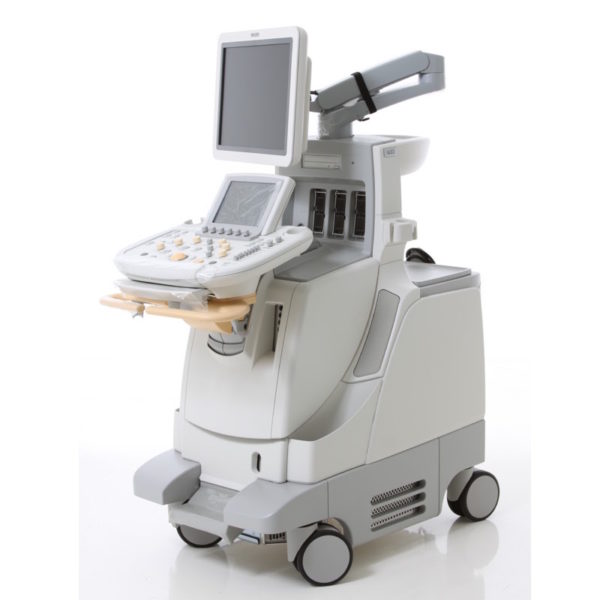
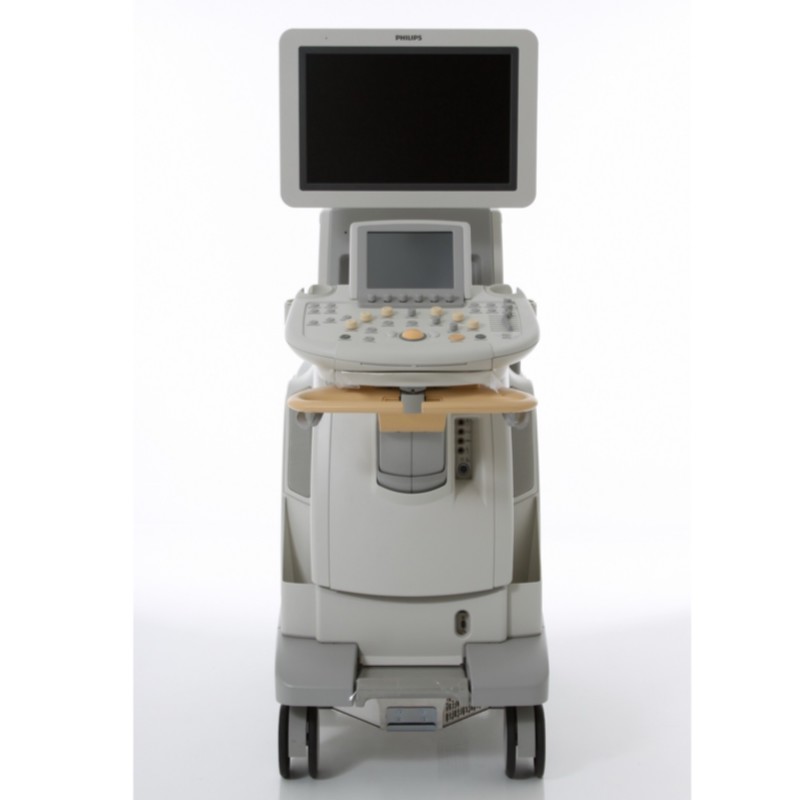
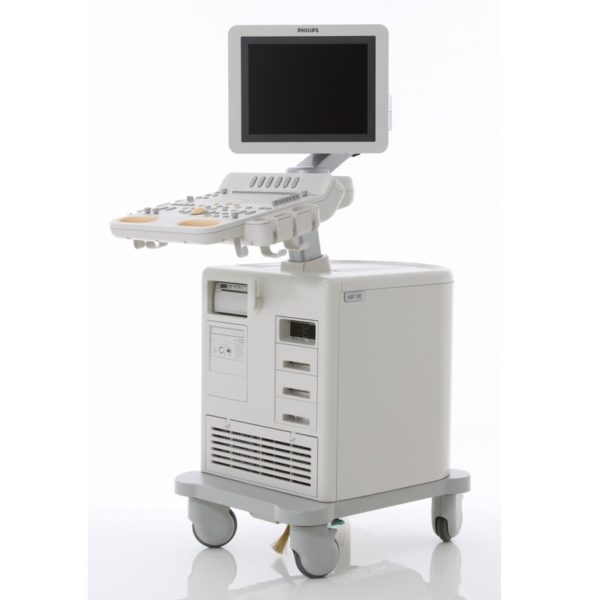
The Philips iU22 is a premium shared service ultrasound machine that offers superior image quality through xMatrix transducers that offer the best aspects of single-crystal and 4D transducers. In clinical settings, the Philips iU22 offers top-of-the-line image quality and features available for radiology, OB/GYN, cardiac, vascular, and specialty imaging applications, such as MSK, pediatric, and elastography. (For cardiovascular-specific applications, the nearly identical Philips iE33 is slightly better equipped.) The average price for a used Philips iU22 ultrasound is between $8,100 and $14,100, depending on the year of the system, its condition and degree of past use, and whether transducers are included in the package. While Philips has since replaced the iU22 with the more modern Philips Epiq 5 ultrasound, the price differential between the Epiq 5 and iU22 means the latter continues to be a popular choice for physicians who need high image quality at an affordable price. In fact, the iU22, which was launched in 2004, has a long history of improvements and revisions that have made it the gold standard for over a decade.
If your staff requires training to use the Philips iU22 or assistance with setup, our on-staff sonographer can provide onsite training for a set price plus travel costs for this $10,000 system.
Ultrasound Supply and Probo Medical (our parent company) offer free technical support during the installation of your iU22 ultrasound as well as over the course of the standard limited warranty. Additional technical support is available after the warranty period expires at an hourly cost per issue.
Ultrasound Supply recommends the use of a surge protector along with a dedicated power outlet for the iU22 system. Additionally, all ultrasound probes should be disinfected after every use with a special disinfectant wipe that’s designed not to scratch the lens. For the best performance in an ultrasound probe, it is important to follow all the maintenance guidelines from the manufacturer.
Height: (adjustable, maximum) 1626 mm (64 in), (minimum) 1397 mm (55 in)
Width: 559 mm (22.0 in)
Depth: 1092 mm (43 in)
Weight: (no Peripherals) 156.8 kg (345 lbs.), approx. 480 lbs with packaging
Voltage: 100V-127V, 220V-240V
Frequency: 50/60 Hz
Power consumption: 750VA – 900VA (depending on system configuration)
Introducing the latest upgrade to the Phillips iU22! Philips first launched the iU22 in 2004 as their new premium shared service ultrasound machine, replacing older units like the HDI 5000. This first version of hardware was designated an “A-cart.” This first version had dual motherboards and dual power supplies and a huge amount of problems with both. The iU22 B-cart improvements were to the circuit boards, cables, power supply assembly, and USB ports. The iU222 C-cart brought a new 20” LCD monitor and articulating arm as well as new circuit boards. The R-cart is a refurbished A-, B-, or C-cart with hardware and software upgrades to G4.0 software.
The iU22 D-cart was launched in 2007 and finally fixed the problems with the dual motherboards by using a unified motherboard. D.1 and D.2 included minor hardware updates. The iU22 E-cart made upgrades to the cart, wheels, and locking mechanism. E.1 was a minor hardware & software update. E.2 added major power supply improvements to support Matrix transducers. E.3 was a minor update to the way the iU22 was manufactured. The iU22 F-cart was a major upgrade that added Type III channel boards. F.1 was a minor manufacturing update. F.2 upgraded the video card. F.3 upgraded to a new SATA DVD drive.
The iU22 G-cart was launched in 2010. This revision added a new channel board and a 21” widescreen monitor. The iU22 G.1 revised the control panel and added larger touch screens. Ultrasound Supply recommends buying D-cart and up as most hardware problems with the iU22 were fixed by this revision and D-carts can be updated to the latest software
The software of a Philips iU22 ultrasound machine can be updated depending on the limitations of its hardware cart. Each major revision of the software was designated with the year and “Vision” in the name. “Vision 2012” was the last major release of the software. Very early A-, B- and, C-cart systems had software that was named simply “system update” with a number. System updates 1.0-2.0 have almost all been upgraded over the years, and system 3.0 is the lowest version still commonly found on used iU22 ultrasounds. Below is an overview of the Vision software updates over the years.
The Philips iU22 Vision 2007 software update included support for the new L15-7io intraoperative linear transducer and the V6-2 4D convex probe. Features added were Qlab’s iSlice, STIC, TCD (transcranial Doppler) imaging, TCD TSI, and Color compare imaging. Improvements were made to workflow, and image quality on a number of existing transducers.
The Vision 2008 software update included support for the new Purewave C5-1 convex transducer on the Philips iU22. Features added were TMQ (tissue motion quantification) in Qlab, Viewforum stand-alone image viewing platform, improved needle visualization, and contrast capabilities.
The Philips iU22 Vision 2009 software update included support for the new VL13-5 4D linear probe. Features added were tissue aberration correction, contrast-enhanced ultrasound, and smart exam automation software.
The Vision 2010 software update on the Philips iU22 added xMatrix including support for the new Purewave xMatrix X6-1 sector transducer, Live xPlane imaging, and support for any PACS. (R-carts can have this update, but cannot support the X6-1 transducer.)
The Vision 2011 software update to the Philips iU22 added support for the X5-1 xMatrix sector transducer. Qlab was upgraded with CMQ-Stress replacing TMQ, and with the additions of the Auto Volume tool, GI 3DQ trending, iCrop, and Elevation compounding. Options with Vision 2011 include the xMatrix performance bundle and Live 3D. (R-carts can have this update, but cannot support the X5-1 transducer.)
The Vision 2012 software on the Philips iU22 adds support for Auto Doppler, Fetal Heart Navigator, and Vascular Plaque Quantification (VPQ), and GYN Elastography.
4D ConvexV6-2 [ 2 – 6 MHz ] – 192 elements, 100° field of view
4D Linear VL13-5 [ 5 – 13 MHz ] – 192 elements, 38mmR
4D Endovaginal 3D9-3v [ 3 – 9 MHz ] – 128 elements, 164° field of view
Linear L9-3 [ 3 – 9 MHz ] – 160 elements, 38mmR
Linear L12-5 50 mm [ 5 – 12 MHz ] – 256 elements, 50mmR
Linear L17-5 [ 5 – 17 MHz ] – 288 elements, 38.9mmR
Intraoperative Linear L15-7io [ 7 – 15 MHz ] – 128 elements, 23mmR
Convex C5-1 [ 1 – 5 MHz ] – 160 elements, 96° field of view, PureWave Crystal Technology
Convex C5-2 [ 2 – 5 MHz ] – 128 elements, 115° field of view
Micro convex C8-5 [ 5 – 8 MHz ] – 128 elements, 120° field of view, Pediatric imaging
Convex C9-4 [ 4 – 9 MHz ] – 192 elements, 108° field of view
Endovaginal C8-4v [ 4 – 8 MHz ] – End-fire sector, 128 elements, 11mmR, 160° field of view
Endocavitary C9-5ec [ 5 – 9 MHz ] – End-fire sector, 128 elements, 8mmR, 173° field of view
Endovaginal C10-3v [ 3 – 10 MHz ] – End-fire sector, 128 elements, 11.5mmR, 164° field of view
Cardiac Sector S3-1 [ 1 – 3 MHz ] – 96 elements, 90° field of view, adult cardiac sector
Cardiac Sector S4-1 [ 1 – 4 MHz ] – 96 elements, 90° field of view, adult cardiac sector
Cardiac Sector S5-1 [ 1 – 5 MHz ] – 80 elements, 90° field of view, PureWave crystal technology
TEE S7-2omni [ 2 – 7 MHz ] – 64 elements, 90° field of view, Transesophageal TEE
TEE S7-2 [ 2 – 7 MHz ] – 64 elements, 90° field of view, Transesophageal TEE
xMatrix X3-1 [ 1 – 3 MHz ] – 2,400 element/.s, 90° field of view
xMatrix X5-1 [ 1 – 5 MHz ] – 3,040 elements, 100° field of view, PureWave crystal technology
xMatrix X6-1 [ 1 – 6 MHz ] – 9,212 elements, 100° field of view, PureWave crystal technology
xMatrix X7-2 [ 2 – 7 MHz ] – 2,500 elements, 90° field of view, PureWave crystal technology
xMATRIX TEE X7-2t [ 2 – 7 MHz ] – 2,500 elements, 90° field of view, PureWave crystal technology
Pedoff (PW Transducer) D2TCC [ 2 MHz ] – Transcranial Doppler applications
Pedoff (CW Transducer) D2CWC [ 2 MHz ] – Adult cardiology applications
Pedoff (CW Transducer) D5CWC [ 5 MHz ] – Deep venous and arterial applications
The Philips iU22 not only offers six different PureWave single crystal transducers but five xMatrix probes. The xMatrix not only improves image quality and penetration like a PureWave transducer, but it also allows for real-time scanning of multiple planes and 4D imaging without needing a typical mechanical 4D probe. This speeds up the acquisition of 4D data over a 4D mechanical probe. C-plane resolution on the iU22 ultrasound is also improved over a typical 4D mechanical probe. The [ 1 – 6 MHz ] X6-1, and [ 1 – 5 MHz ] X5-1 transducers for the Philips iU22 represent the apex of xMatrix design and can accommodate clinical imaging from cardiovascular to 4D OB/GYN exams. The [ 1 – 3 MHz ] X3-1 and [ 2 – 7 MHz ] X7-2 are early xMatrix probes, while the [ 2 – 7 MHz ] X7-2t is a TEE probe with xMatrix technology and represents the pinnacle of transesophageal technology. In addition, the Philips iU22 has three traditional 4D transducers including the [ 5 – 13 MHz ] VL13-5 4D linear.
The most popular transducers for the Philips iU22 are the [ 1 – 5 MHz ] C5-1 PureWave convex, which greatly enhances image quality at higher penetration where patients are heavier and would otherwise be difficult to image, and the [ 3 – 10 MHz ] C10-3v PureWave endovaginal, which also uses single-crystal PureWave technology to improve image quality with difficult-to-image patients. The most popular linear transducer for the Philips iU22 is the [5 – 12 MHz ] L12-5 50mm, which offers excellent vascular imaging as well as having a large enough scan head for efficient breast imaging. The most popular cardiac sector transducer is the [1 – 5 MHz ] S5-1, another PureWave transducer offering better than normal image clarity even at deep penetration.
In terms of 4D mechanical transducers on the Philips iU22, popular options include the [2 – 6 MHz ] V6-2 4D convex and the [3 – 9 MHz ] 3D9-3v 4D endovaginal transducer. 4D probes are superior to 2D transducers because they capture an entire exam’s worth of data in a few seconds of scanning rather than many minutes. There are also views of the internal structures, such as the coronary view or C-plane of the uterus that are only viewable in 3D/4D on an ultrasound and cannot be imaged at all with a 2D version of the probe.
The Siemens Philips iU22 was launched in 2004 as the replacement to the Philips HDI 5000 and continued in production until 2015. The iU22 is a premium level ultrasound machine that was considered the top of the line until the introduction of the Philips Epiq line in 2013. The Philips Epiq 5 replaced the iU22, and while both use single crystal transducers, the Epiq 5 does not have xMatrix probes like the iU22. The Epiq 5 does, however, have a larger monitor and touchscreen, and its size is smaller than the iU22. The Epiq 5 HD15 sits below the iU22 in features, image quality, and price. (Learn more about Philips ultrasound models.)
Philips launched the iU22 and the iE33 at the same time, and ever since many medical professionals have wondered what the difference is and which is best for their needs. The iE33 is focused only on cardiovascular applications, where the iU22 is a shared service machine and focused on women’s health, general imaging, and cardiac applications. The iE33 and iU22 look nearly identical, with the major distinguishing feature being dual touchscreens for navigation on the iE33, while the iU22 has one touchscreen.
The Philips iU22 is a true shared service ultrasound machine able to do all applications from 4D OB/GYN to full cardiac exams. Its closest competitor from GE would be the Logiq E9. Both systems are very similar, although the Logiq E9 has superior 4D imaging for OB/GYN applications, while the iU22 offers superior cardiac imaging, including a 4D cardiac and a pediatric TEE probe. The closest competitor from Samsung is the WS80A ultrasound, which offers superior 4D imaging for OB/GYN applications but has only some of the iU22’s pediatric cardiac support. Below are additional ultrasound models worth considering.
Year Launched: 2004
Estimated Market Price: Premium
Monitor: 17″LCD (20″ option)
Tilt/Rotate Adjustable Monitor: Yes
Monitor Resolution : Image Size Resolution
Touch Screen: Yes
Trackball or Trackpad: Trackball
CP Back-Lighting: Yes
Weight: 345lbs
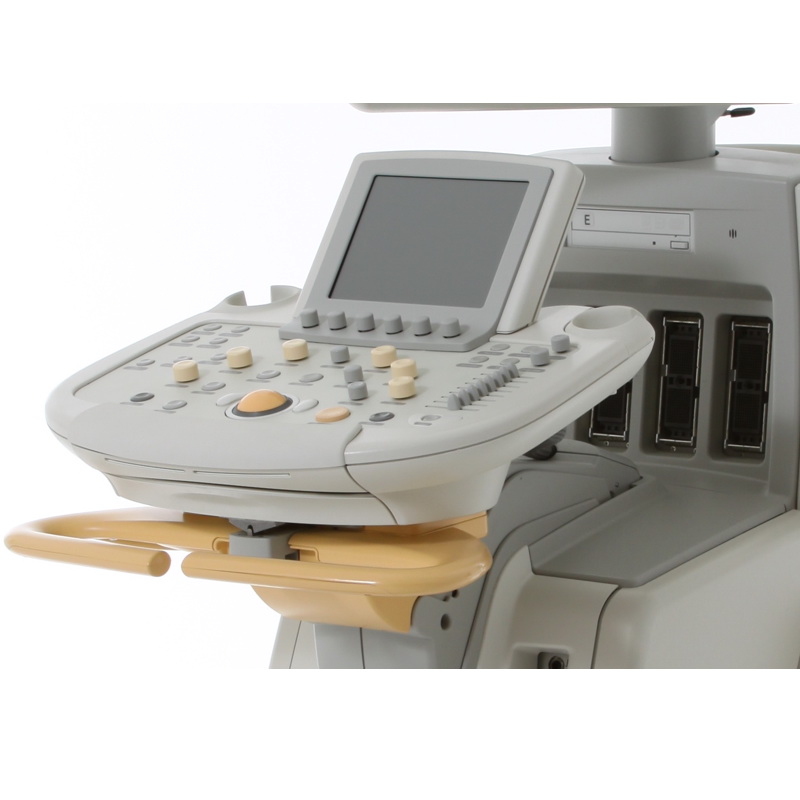
Probe Ports: 3
Battery: No
Boot-Up Time: 120 sec
Sleep Mode: 30sec (stanby mode)
Maximum Depth of Field: 35cm
Minimum Depth of Field: 2cm
Cart: No
Independent Steer & Lockable Wheels: Yes
2D, M mode: Yes
M-color Flow Mode: Yes
Anatomical M-mode: Yes
Trapezoidal Mode: Yes
Color, Power Angio, Pulse Wave Doppler: Yes
Bi-directional Power: Yes
SCW Doppler: Yes
Tissue Doppler(Velocity) Imaging: Yes
Freehand 3D: Yes
Live 3/4D OB/GYN: Yes
HD Live: No
STIC: Yes
Live 3D Echo: Yes
Stress Echo: Yes
Strain and Strain Rate: Yes
B Flow: No
Panoramic Imaging: Yes
Contrast Imaging-Cardiac: Yes
Contrast Imaging – General Imaging: Yes
Strain-based Elastography: Yes
Shear Wave Elastography: Yes
Tissue Harmonic Imaging: Yes
Spatial Compounding(=CrossXbeam): Yes
Speckle Reduction (=SRI): Yes
Auto Image Opt(B mode): Yes
Auto Image Opt(Doppler): Yes
Write Zoom: Yes
Triplex Mode: Yes
Needle Enhancement or Needle Recognition: Yes
Auto NT Measurement: Yes
Auto Follicle 2D Measurement: Yes
Auto Follicle 3D Measurement: No
Auto IMT: Yes
Auto IMT (Real Time): No
Automated B/M/D Measurement: Yes
Automated LH Measurement(Automated Function Imaging(AFI), Cardiac Motion Quantification(CMQ), or Auto EF(Ejection Fraction): Yes
Live Dual (B/BC) Mode: Yes
SmartExam or Scan Assistant: Yes
Fusion: Yes
Raw Data File: Yes
Flexible Report: Yes
Barcode Reader: Yes
Gel Warmer: No
Abdominal: Yes
Women’s Health Care: Yes
OB: Yes
Fetal Echo: Yes
Vascular: Yes
TCD(Transcranial): Yes
Small Parts: Yes
MSK/Anesthesiology: Yes
Pediatrics: Yes
Urology: Yes
Echocardiography_Adult: Yes
Interventional Cardiology: Yes
Echocardiography_Pediatric: Yes
Echocardiography_Neonate: No
Stress Echocardiography: Yes
Transesophageal Echo_Adult: Yes
Transesophageal Echo_Pediatric: Yes
Internal Medicine w/ Shared Service: Yes
Surgury: No
Interventional Radiology: Yes
Contrast Imaging_General Imaging: Yes
Contrast Imaging_Cardiac: Yes
Bowel Imaging: Yes
Strain Elastography: Yes
Shear Wave Elastography: Yes
Convex (1~6Mhz): Yes
Convex (2~9Mhz): Yes(4~9Mhz)
Single Crystal Convex (1~6Mhz): Yes
Single Crystal Convex (2~9Mhz): No
Single Crystal Micro Convex: No
2D Arrary 3D Convex: Yes
Micro Convex (5~8Mhz): Yes
Single Crystal Endocavity_Straight Type: Yes
Endocavity_Curved Type: Yes
BiPlane Endo Rectal: No
Biplane Micro Convex (3~10MHz)
3D Convex: Yes
3D Convex Light Weight: No
3D Endocavity: Yes
3D Micro Convex: No
3D Linear: Yes
Linear (>14Mhz): Yes
Linear (3~12Mhz): Yes
Linear (<9Mhz): Yes
Single Crystal Linear: No
Single Crystal Linear (3~12Mhz): No
Single Crystal Linear (<9Mhz): No
Linear 50mm: Yes
Linear 25mm: No
Hockey stick (<13Mhz): Yes
Hockey stick (>13Mhz): Yes (7~15Mhz io)
T or L shape Intra Operative: Yes
Laparoscopic: No
Phased Array_Adult: Yes
Single Crystal Phased Array_Adult: Yes
2D Arrary 3D Phased Array: Yes
Phased Array_Pediatric: Yes(1~7Mhz)
Single Crystal Phased Array_Pediatric: No
Phased Array_Neonate: No
ICE: No
TEE_Adult: Yes
TEE_Pediatric: No
2D Array 3D TEE: Yes
Pencil CW (2Mhz): Yes
Pencil CW (5 or 6Mhz): Yes
DICOM 3.0: Yes
DICOM SR_Cardiac: Yes
DICOM SR_Vascular: Yes
DICOM SR_OB/GYN: Yes
JPEG, WMV, & AVI: Yes
USB: Yes
HDD/SDD: 160GB
DVD/CD RW: Yes
Wireless LAN: No
Online store for quality healthcare drugs, medical and hospital equipment

©2025 STOCK CAPITAL LTD . All Rights Reserved.


Reviews
There are no reviews yet.